
Where Cuyahoga County Recent Arrests Post
The Cuyahoga County Sheriff inmate-information page points the public to one tool. It is the official "Cuyahoga County Sheriff OH" mobile app for daily jail rosters. There is no conventional searchable web roster. No fixed last-24-hours page exists either, and no downloadable multi-day arrest log. Local coverage of the 2025 app rollout mentions hourly updates. But that is only display cadence. It does not promise every new arrest appears within the hour.
Cuyahoga County recent arrests flow through different systems. A fresh booking reaches the app after intake processing. A current detainee may sit at the Corrections Center or a Sheriff satellite location. A released person can vanish from the active roster. The booking record stays with its custodian. Both practical time windows use the same official starting point. Yet they answer very different questions.
| Window | Official county view | Best use | Fallback |
|---|---|---|---|
| Same day | No fixed 24-hour web feed found | Check the Sheriff app for a new CCCC booking | Booking desks, then the arresting agency |
| Several days | No county web archive or weekly blotter found | Compare the app with city bulletins and court filings | Public-records request for a date range |
| Ongoing custody | Daily roster in the Sheriff app | Confirm whether one person remains in county custody | Release Desk or Ohio VINE |
Need the same-day check? The detailed 24 Hour Arrests guide handles it. For multi-day and archived searching, the wider Arrest Log explains the process. The official Google Play listing for the Sheriff app shows the current Android doorway used for the roster.
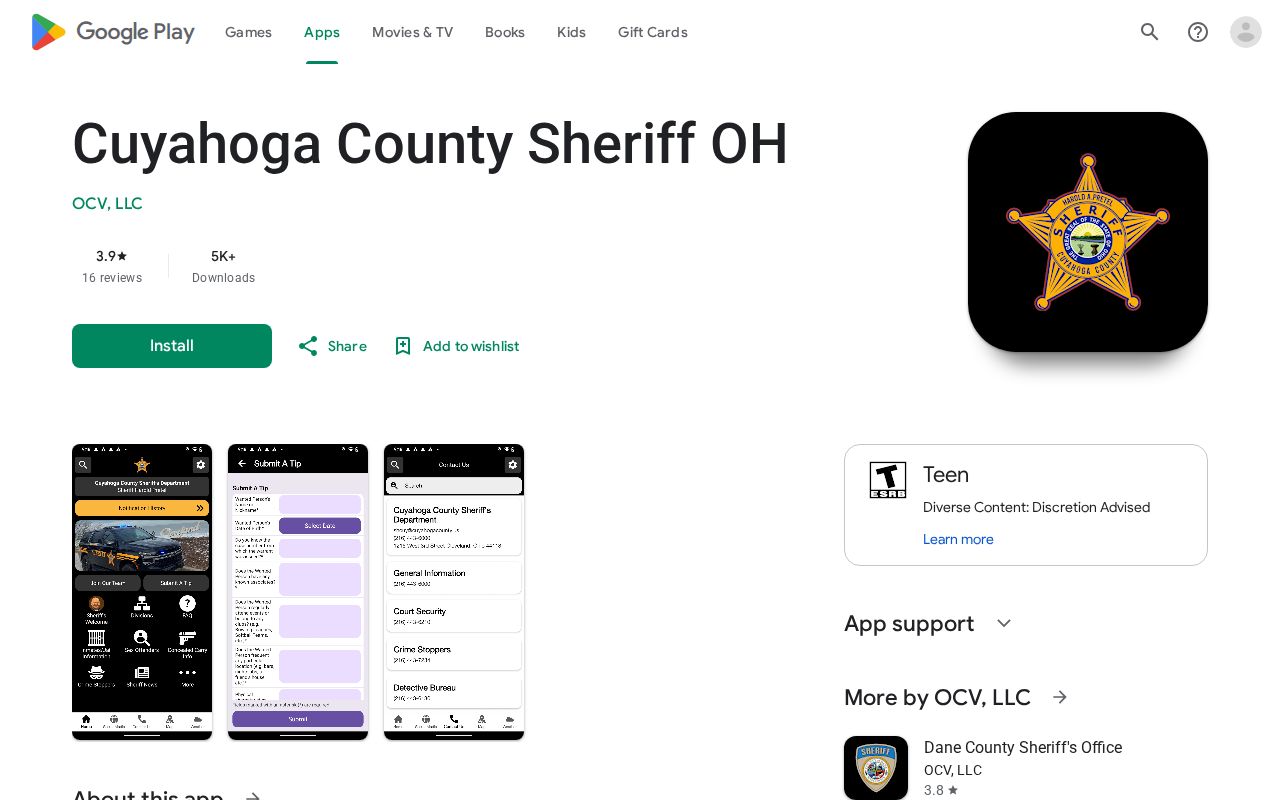
This captured source helps identify the official app without presenting any booking-photo gallery.
Arrested Last Night in Cuyahoga County
For an arrest believed to have happened overnight, use one starting point. Open the official Sheriff app and search the daily jail roster with the person's correct name. Give it time. Intake, identity checks, medical screening, and data entry all delay an entry. If the name is absent, call a Sheriff booking-information desk at 216-698-4820, 216-515-8348, or 216-698-6430. Those desks handle CCCC booking questions. The arresting police department holds its own incident or arrest report.
A city arrest is not automatically a county booking. Lakewood runs a municipal short-term jail. Parma records may begin with Parma Police or its municipal system. Was the person released? The county FAQ directs release questions to 216-443-6150. For later custody changes, the VINELink Check explains how to register for notifications.
The Cuyahoga County Arrest Roster
The Cuyahoga County Corrections Center serves as the primary county jail, and the Sheriff describes the system as managing more than 26,000 inmates each year. There is no browser-based roster. The public web page sends users to the mobile app instead. Reporting on the app says an entry can carry a name, age, race, gender, booking photograph, booking or entered time, and charges. Fields common elsewhere, like bond, a booking number, court date, or arresting agency, are not listed as public Cuyahoga app fields.
| Search or result item | How to read it |
|---|---|
| Name | Use the official spelling and confirm identity with more than a similar name. |
| Booking date or entered time | Shows intake timing, which may differ from the incident or arrest time. |
| Charges | Booking charges that may later be amended, dismissed, or resolved differently. |
| Booking photograph | An app-specific intake image, not proof of conduct or conviction. |
| Facility | Ask the booking desk when the app does not make a current location clear. |
Work the roster in three passes. Search a full name first, testing known spelling variants. Then compare age and booking time instead of trusting the photograph alone. Finally, confirm a possible match with the booking desk or the court docket. Is the person gone from the list? Call the Release Desk and request the booking record by date. A disappearance can mean release, transfer, a roster refresh, or an app change. It does not mean the record was destroyed.
Cuyahoga County Arrest Sources Compared
No one source covers every stage of custody. Start with official channels, since commercial pages and news reports may carry an old entry without the update that followed. News 5, Spectrum News 1, Cleveland 19, and Daily Legal News add context, not a full roster. They report; they do not list everyone in custody. Third-party Cuyahoga County indexes exist too. Their entries can be stale, incomplete, or wrong, so treat the government record as the real one for a Cuyahoga County arrest.
| Channel | Photo? | Status | Best use |
|---|---|---|---|
| Sheriff app | Reportedly yes | Official county route | Current CCCC roster and recent intake |
| Arresting police agency | By request when releasable | Official local source | Incident and arrest reports |
| County court docket | Usually not the booking photo | Official court source | Filed charge, hearings, and disposition |
| Ohio DRC search | Yes when available | Official state source | Sentenced state prisoners and supervision |
| Local news | Sometimes | Independent reporting | Episodic context, never a full log |
| Commercial indexes | Often | Unofficial | Secondary discovery only, then verify |
Is a missing person proof there was no arrest? No. The person may sit in a municipal facility, lack an entry yet, be released, transferred, protected by law, or listed under a different spelling. Confirm with the responsible agency.
Recent Arrests by Cuyahoga County City
City records begin with the arresting agency. Present custody can shift later to the county system. The three city guides below keep those local differences clear. Cleveland Division of Police records and daily-updated incident data back Cleveland Recent Arrests. Parma Police offers a recent police-report search. But it lists no public booking roster, as explained under Parma Recent Arrests. Lakewood runs a Police-2-Citizen Daily Bulletin. It includes an "AR Arrest" event type. Its short-term jail makes Lakewood Recent Arrests distinct from a county-only search.
The city of arrest does not name the holding facility by itself. Call the police agency for its report. Then check the Sheriff app for a later CCCC booking. That two-source approach keeps a municipal event listing from being mistaken for live county custody.
Inside a Cuyahoga County Arrest Record
A booking record marks one arrest, nothing more. The current app shows some fields, but deeper detail sits with the booking desk, the arresting agency, or the court. Blank space means nothing. Never read it as "no bond" or "no court date," and ask for the source record that answers your specific question.
| Field | What it shows |
|---|---|
| Name and descriptors | Reported identity information used during booking. |
| Booking date and time | When intake was recorded, not necessarily when the incident occurred. |
| Booking photograph | An identification image made during intake. |
| Charges | Charges recorded at booking, subject to later court action. |
| Booking or inmate number | A stable identifier if the custodian releases one; not confirmed as a public app field. |
| Bond and court date | Use the release desk and court docket because these were not confirmed app fields. |
| Arresting agency | Identifies the office to ask for the underlying arrest report. |
| Disposition | Not a booking field. It belongs in the later court record. |
Cuyahoga County Mugshots After an Arrest
Cuyahoga County mugshots are booking photographs taken at the jail. The Sheriff's web page hosts no gallery. It points people to the official app instead. Reporting in 2025 noted that app entries can carry smaller booking images. No fixed display period is published, either. Once someone is released or transferred, ask the record custodian for the nonexempt booking image rather than assuming it vanished. State prison works differently. The Ohio DRC Offender Search covers people serving state sentences or under DRC supervision, not someone booked at CCCC an hour ago. Federal Bureau of Prisons results stay text-only. No booking photos there. Commercial mugshot sites, meanwhile, may keep copied images long after an official roster changes, and they answer to no court.
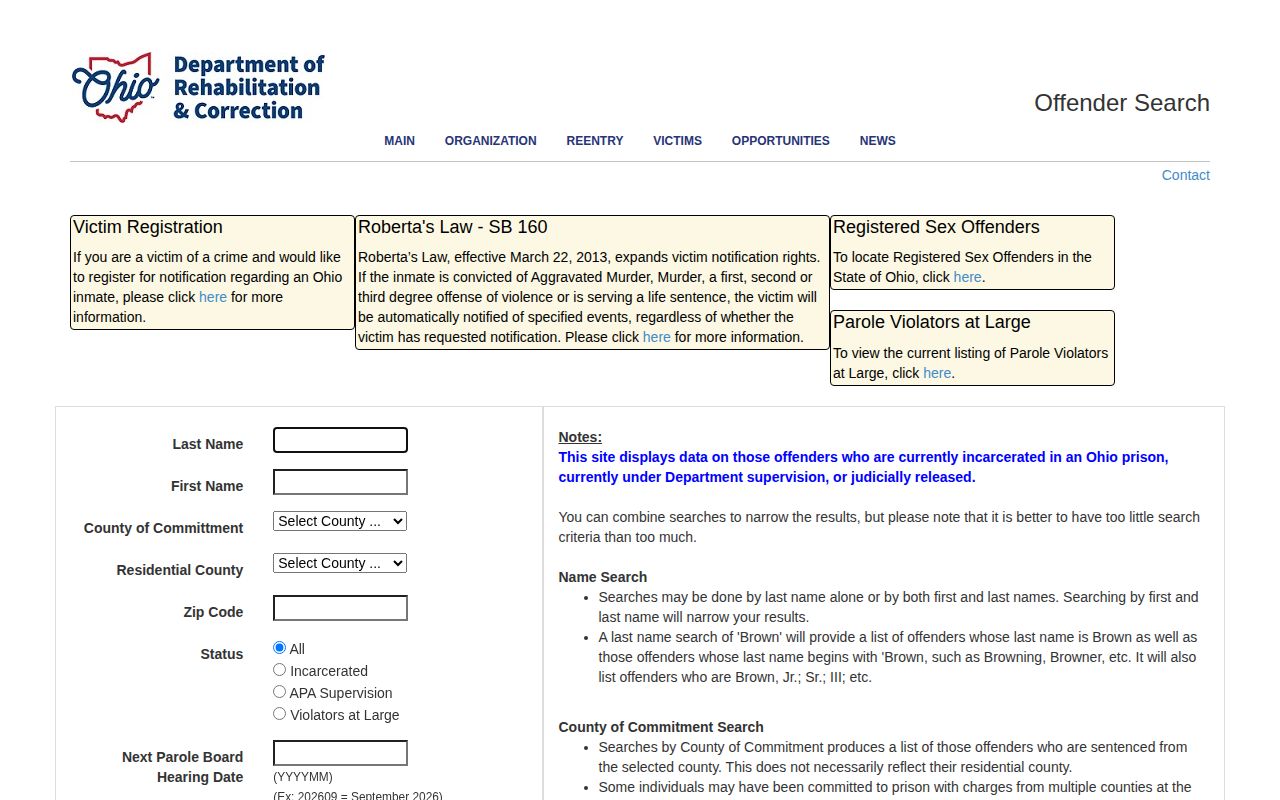
This state search should not be confused with Cuyahoga County's current jail roster.
Requesting a Cuyahoga County Arrest Record
The county public-records portal handles requests when an app entry is missing. Ohio and county rules demand no special form. They also require no identity or explanation of use. A written request still helps, since it pins down the date range and delivery method. Ask for the nonexempt portions. Invite the office to cite legal grounds for anything withheld.
- Identify the person, approximate booking date, arresting agency, and desired record type.
- Ask the Sheriff for the booking sheet, booking photograph, roster entry, release record, or applicable retention schedule by name.
- Submit through the county portal or contact the Records/Warrant Division at 216-443-6100.
- Request electronic delivery when practical and ask for a cost estimate before copies are produced.
- For the incident narrative, send a separate request to the police department that made the arrest.
Costs run cheap in Cuyahoga County. Chapter 106 of the county code caps ordinary paper copies at three cents a page. Totals under a dollar get waived. Email or fax copies generally cost nothing. Devices may add up to a dollar per gigabyte, and advance payment can be required for estimated copy costs. The Sheriff's office posts no fixed booking-photo fee, so ask before ordering through the official Cuyahoga County public-records portal.
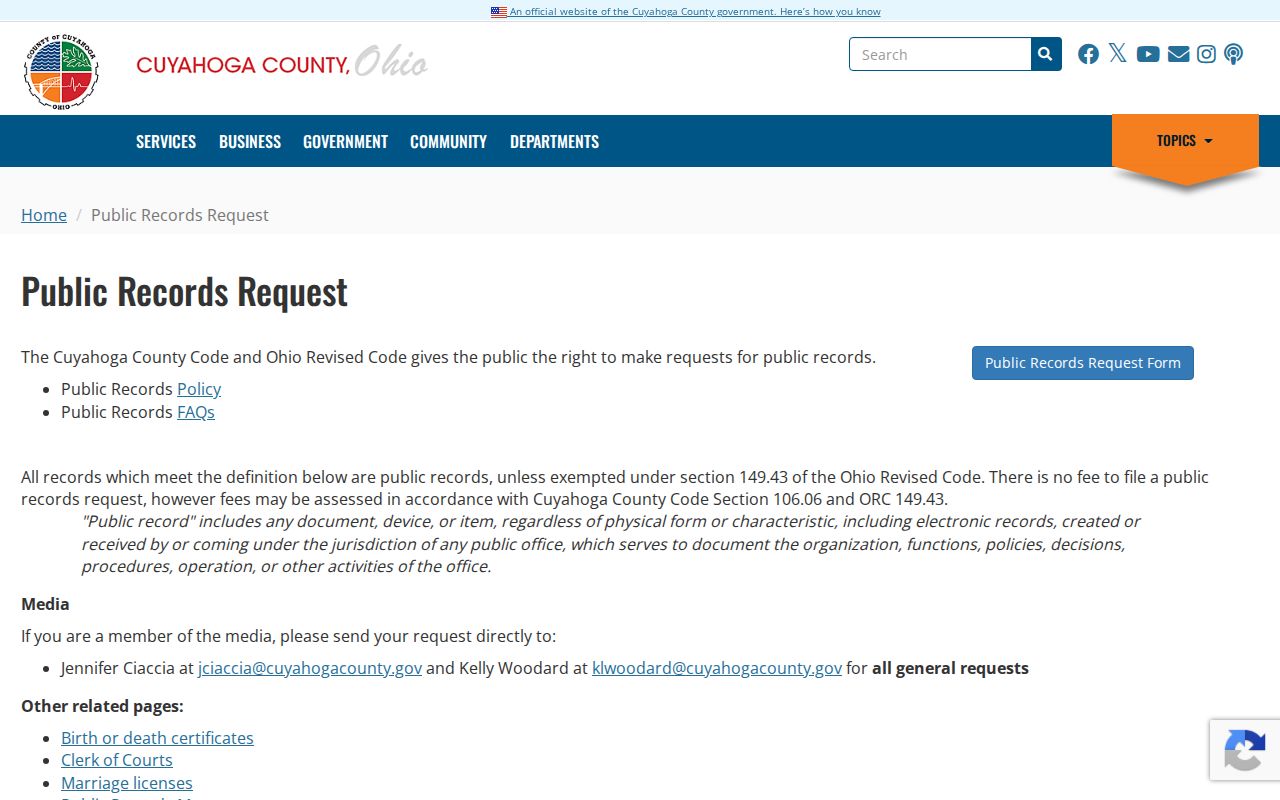
The portal reaches county offices. A city police report still belongs with the city that created it.
Ohio Law, Sealing, and Booking Images
Ohio Revised Code section 149.43 defines public records broadly. But it protects certain material. Confidential law-enforcement investigatory information qualifies for protection. It covers material whose disclosure would likely reveal an uncharged suspect, a confidential source, a specific technique, work product, or a safety-sensitive fact. Redaction is the expected fix. An agency should release the remainder. Juvenile, victim-identifying, or sealed details may be lawfully absent.
A sealing or expungement order goes to the official custodian. Cuyahoga Common Pleas cautions that copies held by third parties can survive the order, so an official correction will not scrub every copied search result. The County Public Defender supplies sealing forms. Municipal-court versions are included. Use the legal path, never a workaround that exposes protected juvenile information or evades a lawful seal. The Ohio booking-photograph statute sets the governing rule.
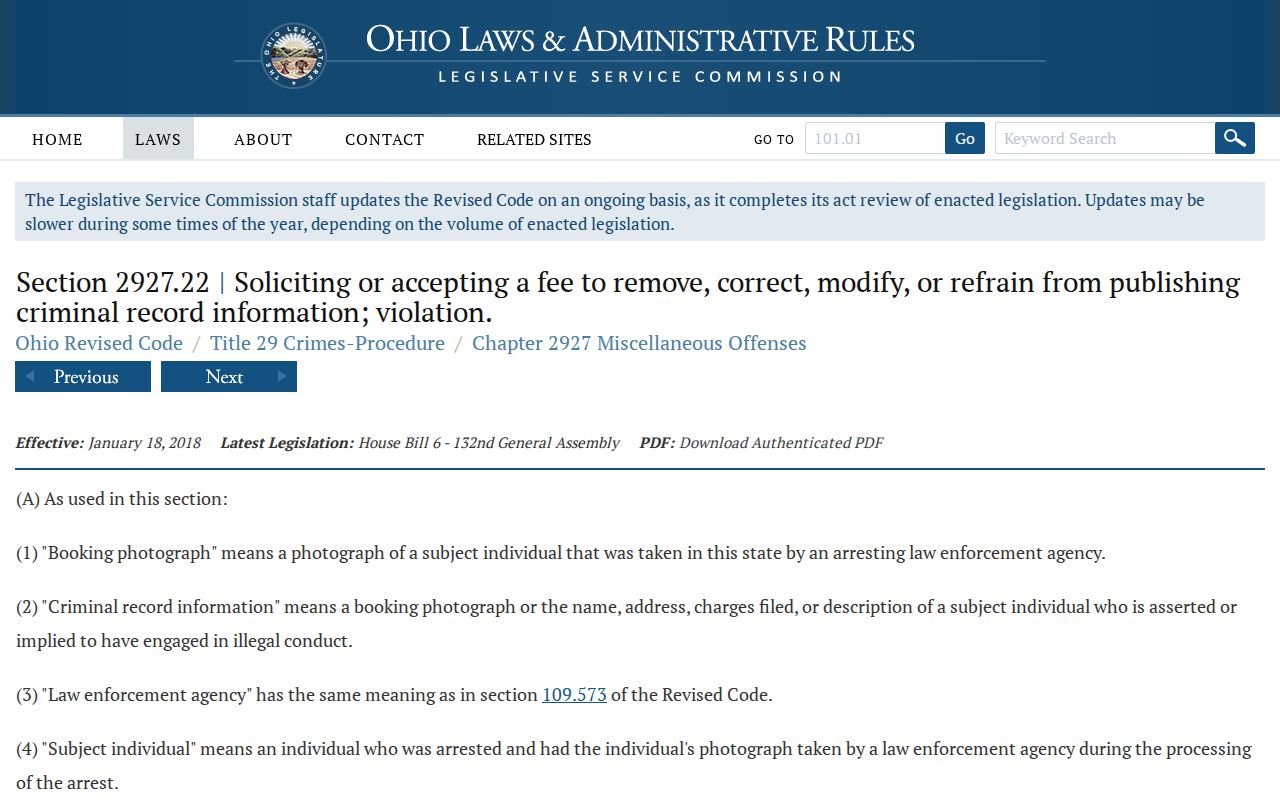
Trust the statute on payment rules, not removal services.
Cuyahoga County Arrest Warrants and Wanted Notices
The Sheriff Warrant Unit handles warrant service and fugitive work for the county. It is the official contact. The county publishes no complete public warrant-search database online. Call the Records/Warrant Division at 216-443-6100, or check with the court that issued the warrant. Parma and Lakewood municipal courts both warn that online warrant information can lag behind reality. A listing may already be inactive, so a screenshot is never final confirmation.
Cleveland 19 runs a recurring “Cuyahoga's Most Wanted” feature. That is news coverage, not the Sheriff's full official list. Never approach anyone shown in a wanted notice. Pass safety tips straight to law enforcement instead. For a Cuyahoga County warrant, the Cuyahoga County Sheriff Warrant Unit page names the office to contact, and legal status rests on confirmation from the issuing court or agency.
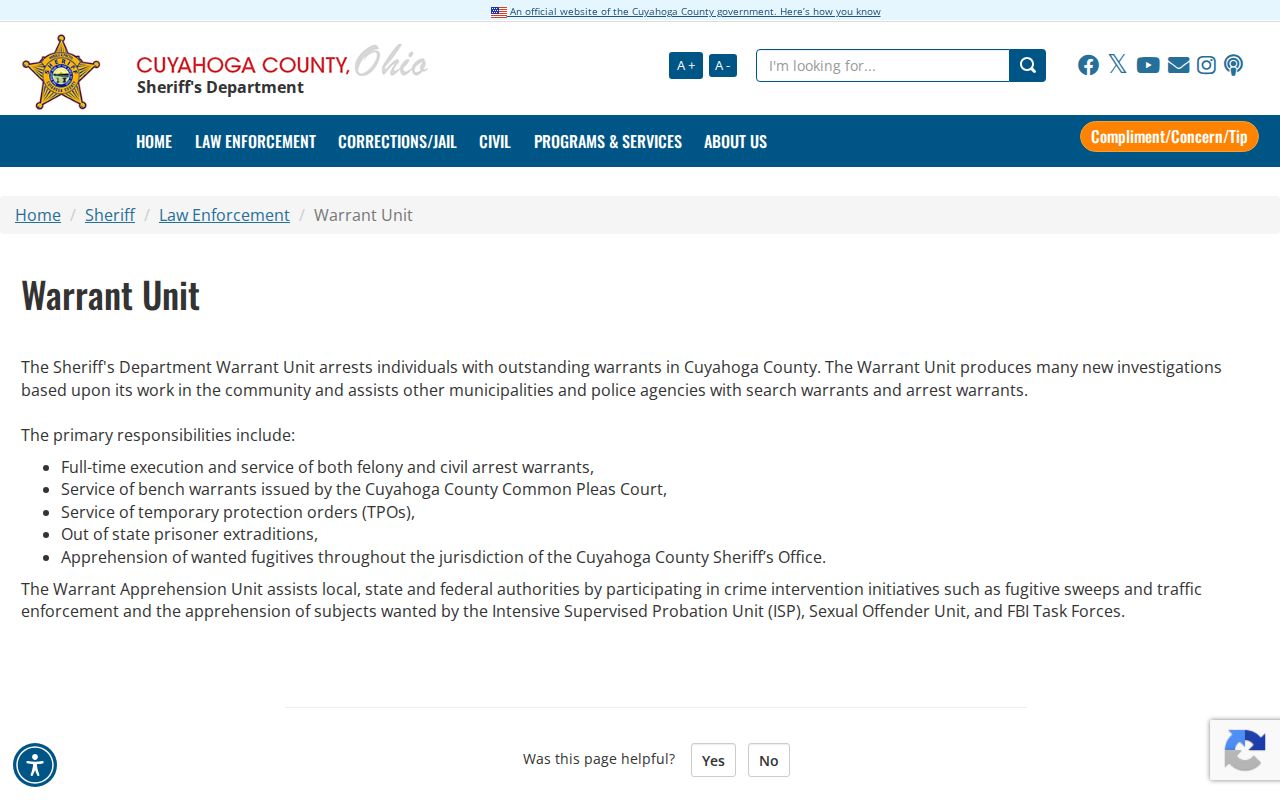
This source is safer for warrant routing than an old third-party or media list.
After a Cuyahoga County Arrest
Booking is only step one. The Cuyahoga County criminal docket search takes a name or case number. Public Defender instructions suggest adding a date of birth too. Newest activity appears first. From there, the docket can trace an initial arrest charge through arraignment, bond action, later pleadings, and the final disposition. Treat the interface as a convenience, though. The county calls it a selected-record system, not a promise that every filing is online. Pleading images can be missing entirely. Sensitive cases may carry none at all. Confirm anything important with the Clerk or the right municipal court.
Custody Beyond the Cuyahoga County Jail
Not every locked-up person sits in the county jail. Custody moves, and each stage has its own keeper. The Ohio DRC Offender Search tracks state prisoners and people under DRC supervision; enter a name or number, then match commitment details against identifying data. A person just arrested here will not appear there. The Federal Bureau of Prisons Inmate Locator reaches federal prisoners from 1982 forward. It posts no booking photos. ICE runs a separate detainee locator for people in its custody, plus certain CBP holds past 48 hours. Exact identity details get the best results. Federal pretrial detainees often sit in contracted local facilities under the U.S. Marshals Service. USMS publishes no general arrest roster, though. Match the route to the custody stage: the county app for a fresh CCCC booking, the court for the case, Ohio DRC after a state sentence, BOP for federal custody, and ICE for immigration holds.
Cuyahoga Arrest Records After Roster Removal
A roster entry vanishing means little on its own. The line rolling off destroys nothing. It could signal release, a transfer, an active-custody filter, a refresh, or a product change. No Sheriff retention period is in print. Booking sheets, photos, jail rosters, release records, and app data are not all alike. Each may fall under a different record series. Ask the custodian for the schedule and series names that apply. Older arrest material takes a different path. Contact the Sheriff or the city custodian first, then the Clerk for filed case records. The Cuyahoga County Archives preserves historical county records. It also keeps some current ones for a while. Not every CCCC booking photo lands there. Its research guidance asks for record type, names, dates, and volume or petition details when known. Date-check the app route too. Local reporting describes an earlier Sheriff app, its removal, and a new 2025 arrangement.
Cuyahoga County's Changing Jail System
Cuyahoga County's jail map is about to shift. Plans call for a Central Services Campus in Garfield Heights, with operations expected in 2029. That may reshape both geography and lookup pages. For now, the reference points still stand. They are CCCC, the Sheriff inmate-information page, and the official app. Save any instructions with a date stamp. Then return to the county page before trusting an old app-store or facility link, since an official migration could retire any of them. Change like this sharpens the core rule for Cuyahoga County recent arrests. Identify the custody stage first. Then pick the agency that owns the record. A city police report, a county booking entry, a court docket, a state-prison record, and a federal locator can all describe the same person at different moments without being interchangeable. The Sheriff lists booking drop-off and pick-up hours at 6:00 a.m. to 6:00 p.m. County-warrant arrests get booked at any hour. Neither schedule promises when an app entry posts. When timing matters, jot three points: when the arrest was reported, when intake was recorded, and when the source was checked. That small audit trail helps the booking desk or records custodian find the right event and avoid matching the wrong person.